
FLOWERS. Dal Rinascimento all’intelligenza artificiale
Chiostro del Bramante, Rome, Italy
find more info about the exhibition here:
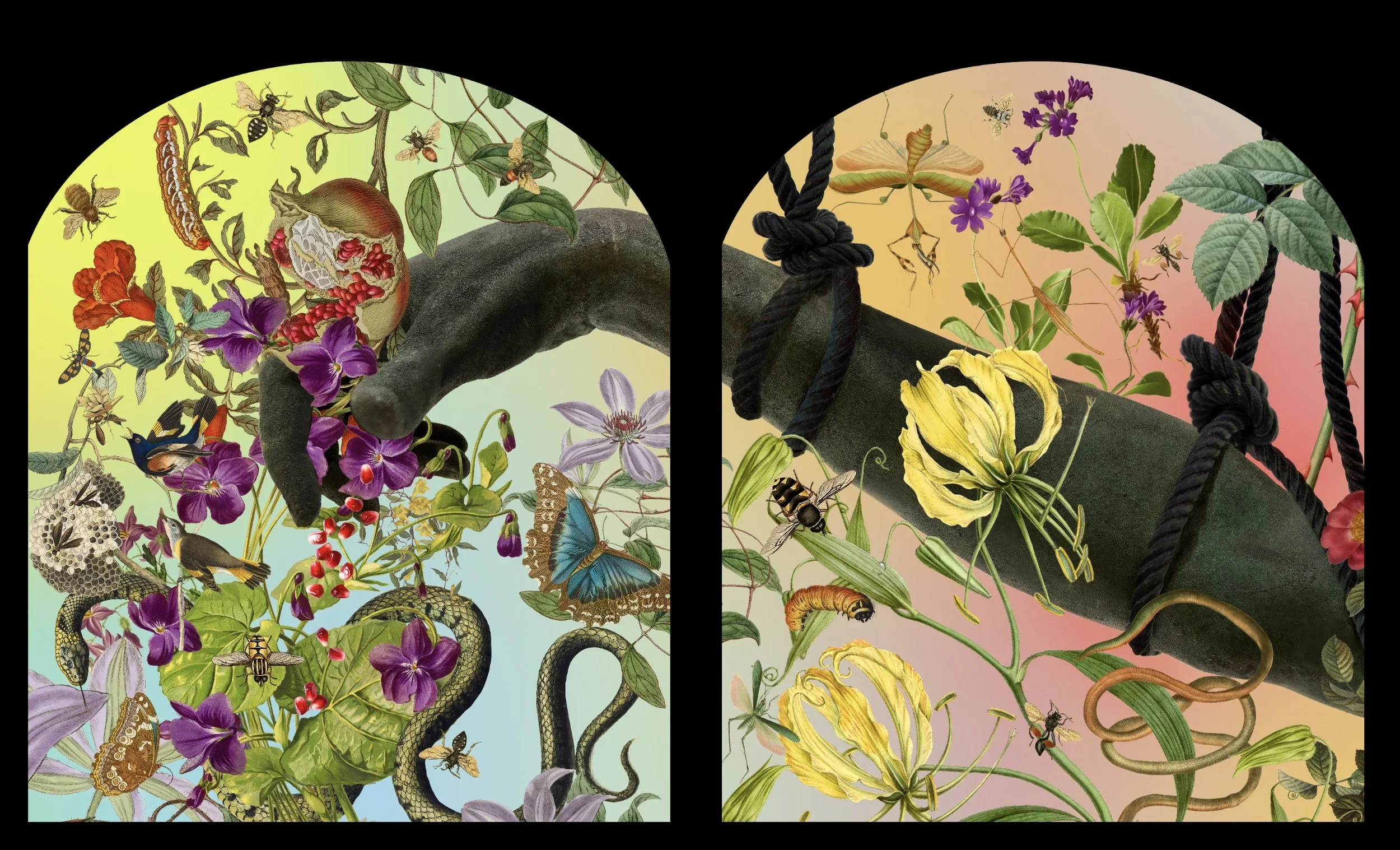
excerpt from TEMPLE OF FLOWERS Austin Young 2025, commissioned by Chiostro del Bramante in Rome
“FLOWERS”: THE CHIOSTRO DEL BRAMANTE CELEBRATES FLOWERS IN ART WITH AN EXHIBITION IN ITALY DEDICATED TO THEIR BEAUTY AND POWER
From February 14 to January 15, 2026, “Flowers. Art from the Renaissance to Augmented Reality” presents a journey where the endlessly evocative power of flowers emerges. The show brings together art, science, and technology creating a universal narrative that spans the centuries: from the masterpieces of Jan Brueghel to Ai Weiwei and latest experimentation with digital technologies in contemporary art.
Fragile and powerful, flowers speak a universal language that transcends centuries and cultures. They narrate emotions, celebrate beauty, silently protest, and preserve age-old tales. It is precisely to them that the Chiostro del Bramante in Rome dedicates an extraordinary exhibition: “Flowers. Art from the Renaissance to Augmented Reality”,running from February 14 to September 14, 2025. Curated by Franziska Stöhr and Roger Diederen, in collaboration with Suzanne Landau, the exhibition offers a journey through five centuries of art, culture, and innovation.
‘Flowers are much more than simple decorative elements,’ explains Natalia de Marco, Artistic Director of the Chiostro del Bramante. ‘They act as universal symbols, epitomising every aspect of life: from resilience to spirituality, from love to conflict, from science to ecology.’ This sensory adventure comes to life in an exhibition that combines works from the past and the present, offering the public an unprecedented interpretation of the role flowers have played in the evolution of our history and society.
The masterpieces on display span from the 16th to the 21st century. Paintings, sculptures, manuscripts, tapestries, photographs, site-specific installations, and pieces using augmented reality intertwine to narrate the encounter between art and nature. Among the Masters exhibited are Jan Brueghel the Elder, depicting flowers as silent protagonists in a vast symbolic universe, suspended between sacred and profane; Girolamo Pini and his extraordinary attention to botanical detail; Edward Burne-Jonesand William Morris with their delicate floral representations, evoking an ethereal beauty typical of the Pre-Raphaelite movement.
Alongside these historical works, visitors will see Ai Weiwei’s and Kapwani Kiwanga’s contemporary installations, where flowers become a metaphor for resistance, highlighting the social and political challenges of our time and the past.
A key feature of the exhibition is also the use of new technologies. Amongst the contemporary artists featured, Studio Drift seduces the public with their technological installations inspired by natural processes, while Kehinde Wiley offers a bold and vibrant interpretation of the floral theme. Miguel Chevalier explores the question of the naturalness and artificiality of flowers with his immersive installation and Rebecca Louise Law builds a fascinating corridor in which visitors will be literally surrounded by flowers, presenting a sensory experience as unique as the olfactory journey hosted in another area of the exhibition space. Even the exterior of the Chiostro del Bramante will take center stage, completely transformed into an earthly paradise thanks to the installation by Austin Young.